Sunday, March 01, 2015

March 2, 2015 - March 6, 2015 Agenda for Contemporary Composition


Monday, March 2nd:

First Period:
8:00 - 8:20
Groups: 

Reader: the one who reads

Questioner: the one who poses the questions

Verifier: one who checks to see the information is accurate

Recorder: the one writes down the answers

Break into the following groups: 

Cynthia Barragan
Kamron Orange 
Jalen Owens 
Bianca Vazquez

Andrea Chavez
Araksi Fesilyn
Jose Mendoza
Katia Ramos 

Stephanie Delgado 
Karla Gutierrez
Marine Trtryan
Renatta Chavez 


Astrid Duarte
Chelsy Velis 
Justin Pivaral
Tereza Sahakian 


Christian Flores 
Maria Kivokian 
Eddie Larita 
Audrey Spain


Robert Ford 
Jasmine Newman 
Yutzil Villares
China Phillips

You may decide who will do the reading; who will pose the questions and lead the discussion; who will check to verify the information is correct (check the text); who will write down the information 

Your task is to read the first twelve pages of The Great Gatsby and establish the characters, the setting, the thematic strands, and any figurative language you may encounter.

Everyone will switch roles, but the first person designated as the reader will begin reading.

The person designated as the questioner will ask questions and lead discussion regarding the text. However, everyone is expected to participate and may ask and answer questions, and lead the discussion as well. 

The person designated as the verifier will check the text to verify that the answers are correct; however, she or he may also ask and answer questions and lead the discussion as well. 

The person designated as the recorder will write the group's findings and turn in; however, she or he may also ask and answer questions and lead the discussion as well.

Some information about the structure of THE GREAT GATSBY:


The story of THE GREAT GATSBY is narrated by another character who tells the story in flashback. This narrative device is called a "FRAME NARRATIVE".  The narrator is NOT the lead character or protagonist; the narrator recounts the events in the protagonist's journey, makes comments and provides context about the events or characters, and provides moral judgments. The presence of a narrator draws the reader into the story and provides insights which might be closed to us if there were not a narrator.


Some Guiding Questions to Get You Started: 

1. Who is the narrator of the story? How might his character, his values, and experience color his telling of the story and the way we see the other characters in the book?

2. The clash between two geographical areas, specifically the East vs. the West, plays a prominent role and provides a recurring theme in the book. Find examples of how geography plays an important role in the story.

3. Pay attention to class in THE GREAT GATSBY.  This is a book about the clash between "Old Money" and "New Money" and the poor; the 1 Percenters versus the ones whose lives were destroyed by the 1 Percenters in their quest to make more and more money. 


Create a Character Log
Create a Figurative Language Log
Create a Chasing the Motif


________________________________________________________________________________

2nd Period:
THE BLUEST EYE; Prologue to page 17


Symbols:
Marigolds (picture of Marigolds)
The constant renewal of nature. Claudia and Frieda sacrifice their money and marigold seeds to plant the seeds deep in the earth of Lorain, Ohio, so that Pecola's baby will develop and be born healthy; however, the soil of Lorain, Ohio is inhospitable to Pecola, and her father's rape and impregnation of her perverts the healthy renewal of nature.

Break into the following groups:
Ray Reyes
Ty Young 
Jessianne Banegas
Maci Greene

Lupo Benatti
Mary Rose Campos
Chantal Hernandez
Rebecca Olguin


Ruth Zacarias
Joseph Khudeda 
Clarissa Meza-Carrillo
Ivette Priego

Cat Mazzotta
Christian Polanco
Taraz Welch
Davion Cook

Tigran Minasyan 
Jesus Alfaro
Tyler Lynch
Jahayra Rosas
Christopher Ake 

Maria Torres 
Kona Jackson
Pamela Lara
Ricardo Quintilla
Marlinda Rivas 

Guiding Questions:
Autumn (picture of autumn)

1. What do we normally associate with autumn?

2. Describe the parents of Claudia and Frieda. Find specific examples of actions by Claudia's mother and list them in the Character Graphic Organizer.


Character Comparison Charts 

Claudia’s Mother
Pecola’s Mother 
Page Number: 
Quotation from the Text:

What is Claudia’s Mother Doing?

What is Claudia’s Mother Saying? 

Analysis: 


Tuesday, March 3rd: 

Period 1: 

Watch six minute video on the life of Zelda Fitzgerald.

Compare and Contrast Character Analysis in THE GREAT GATSBY

Page 7:
Analyze the passage on page 7 starting with, “He had changed since his New Haven years….” And ending with “….men at New Haven who hated his guts.”

Write the phrases and words which describe Tom.  Here are some phrases and words to get you started:
1.     “Sturdy” 2. “Hard mouth” 3. “Supercilious manner”
Page 8:
Analyze the passage on page 8 starting with, “The only completely stationary object in the room…..” and ending with “…two young women ballooned slowly to the ground.”

Write the phrases and words which describe the room and the women, Daisy and Jordan. Here are some phrases to get you started:
1.     “…enormous couch on which two women were buoyed up as though upon an anchored balloon.”
Write a brief paragraph comparing the words, the phrases and imagery comparing Tom to the two young women, Daisy and Jordan. 

For tonight, finish reading Chapter 1 in THE GREAT GATSBY

--------------------------------------------------------------------------------------------------------------------------

Period 2:
Vocabulary Game
Board Race: Words from The Bluest Eye, Prologue through Page 17
THE BLUEST EYE; pages 15 – 18
Acted out the personification of paragraph on page 15, starting with “Their conversation is like a gently wicked dance….” And ending with “punctuated with warm-pulsed laughter….”
Vocabulary:
Irrevocable
Complementing
Metaphysical
Hem
Consolidate
Peripheral
Tomorrow: go over the metaphor at the bottom of page 17

Wednesday, March 3rd: 

Period 1:
Finish your paragraph from yesterday comparing Fitzgerald's description of Tom to his description of Daisy and Jordan.

Pass out the Figurative Language Handout: 

Figurative Language Analysis:
Personfication
Metaphor
Simile
Imagery 

Break into your groups and look for examples of figurative language in the first chapter of THE GREAT GATSBY. Write the quotation using the figurative language; write what is being compared and to what; write what the comparison reveals about the object being compared. 

Finish for homework!

Pass out the Symbols/Motifs handouts

Begin reading Chapter 2

-------------------------------------------------------------------------------------------------------------------------

Period 2:


Break into your groups

Pass out the Figurative Language graphic organizer. Read pages 17 through 32 and find examples of figurative language. Write the examples and what the object is being compared to; explain the effect that is achieved through the comparison. 

Personification: giving human qualities to inanimate objects 

Metaphors: the comparison of one thing to another without using like or as, particularly something which is concrete and symbolically is representative of something abstract. May also be two objects which share a common quality.  
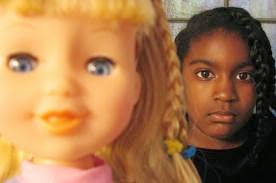
Similes: the comparison between two unlike things using like or as. 

Imagery: words which  appeal to our physical senses. The words may create strong visual images so that we see on our own movie screen inside our heads the images created by the author's words, but imagery also includes words the writer has used which help us "hear", and "feel" and "taste" the scene the writer has created. 

Thursday, March 5th:


1st Period:
THE GREAT GATSBY
Pair up
Reread last night’s reading (finish Chapter 2)

Vocabulary:
Regal: like royalty; majestic

THE GREAT GATSBY, CHAPTER 2, FIGURATIVE LANGUAGE
Find and write examples of figurative language from the pages of 27 - 38:
Everyone should write on her/his own sheet of paper

Metaphor: comparing two unlike things not using like or as

Simile: comparing two unlike things using like or as

Personification: giving human characteristics to inanimate objects

Imagery: language that appeals to the five senses. The words create a rich image of the scene which plays like a movie in the mind of the reader. The words or language create the visual scene in the mind of the reader. The words also create the sounds, the smells, the taste, the feel of the scene.

Explain what are the two things being compared
Explain how that reveals the character of the thing or person begin compared

Example:
Page 27: “He passed his hand over the brown washrag of the coat.” Metaphor: comparing the dog’s coat to a brown washrag.
Imagery: This creates in the mind of the reader the rough texture and appearance of the dog’s coat, likening it to the texture and appearance of a washcloth.

Page 28: “At 158th Street the cab stopped at one slice in a long white cake of apartment-houses.”
Metaphor: Comparing the apartments to a white cake and the individual apartment to a slice of the white cake.
Imagery: The descriptive words create an image in the mind of the reader of the white ornate apartment building.

Page 29: “The living room was crowded to the doors….over scenes of ladies swinging in the gardens of Versailles.”
Allusion: It is a reference to the historical period of Louis XV’s court, with its opulence, its luxury and its “damn the poor, let them eat cake” attitude of self-absorption of the rich.  

Minimum of ten and must have examples from each page.

--------------------------------------------------------------------------------------------------------------------------

Period 2:
Pair up
Reread pages 20 – 32
Find examples of figurative language in those pages:

Similes: A comparison of two unlike things using like or as.

Metaphors: A comparison of two unlike things not using like or as.

Personification: giving human qualities to inanimate objects.

Imagery: Words used by writers to create scenes – like watching movies in your mind – with strong words which appeal to the five senses: visual, aural (hearing), taste, touch and smell.  The words create in the minds of the readers scenes where they see the scenes as movies, with sounds, with taste, with touch, with smells.

Allusion: Reference to other literature, art, and/or historical eras.

Mnemonic: having to do with memory and tricks to help with memorization

Minimum of ten examples and must span pages 20 – 32.
Write the page number
Write the quotation
Write the figurative language
Write the two objects being compared

Page 21:  “The emotion of years of unfulfilled longing preened in their voices.”
Personification: emotion of unfulfilled longing preens.
Explanation: Emotion is given the ability to preen, which is a human (or even an animal) activity
Vocabulary:
Preen:  to congratulate, or pride oneself on something.
Acridness: bitterness, a chemical bitterness to the taste of

Page 22: “The lowness of the stool made for my body, the security and warmth of Big Mama’s kitchen, the smell of the lilacs, the sound of the music, and since it would be good to have all my sense engaged, the taste of a peach, perhaps, afterward.”
Pamela!!!! Imagery! Morrison’s words engage the reader’s five senses  - feel (warmth), smell (the lilacs), sound (music) and taste (peach).
Connotations:
Tone: 

Page 22: “….slipping around in the zinc galvanized tub, no time for soaking…make curtains of soapy water careen down between the legs.”
Imagery:
Connotations:
Tone:

Friday, March 6th: 


Friday, March 6th:
1st Period:
No one here today due to dance show.
Gave them twenty minutes to work on last night’s homework: figurative language in Chapter 2 of THE GREAT GATSBY
Passed out and went over the “Character Chart for THE GREAT GATSBY”; discussed Nick Carraway:  analyzed his biases, whether he is a reliable narrator, affiliation or lack thereof with Tom; the fact Tom felt comfortable in introducing Myrtle, his mistress to Nick, his wife’s cousin.
Nick’s attitude revealed by his tone describing Myrtle, the love nest she shares with Tom, and the people who attend the party in the love nest that Sunday afternoon. 
Read pages 39 – 41; discussion: comprehension, cultural references: Rolls Royce, Castile, gypsies: Broadway dancers

----------------------------------------------------------------------------------------------------------------------------

Period 2:
No one here today due to dance show.
Collected last night’s homework on figurative language in Chapter 2, pages 22 – 32.
Passed out Figurative Language Analysis paper for THE BLUEST EYE
Read pages 33 – 34.
Discussion: gypsies,
Analysis: Page 33 “They looked out occasionally….hiding the nakedness that stood in their eyes.”
Vocabulary:
Foist: to force itself on someone
Parlor: front room in a home used for entertainment; a room in a building used for business purposes such as a pizza parlor, a beauty parlor, an ice cream parlor.
Novice: a beginner, someone who is still learning how to do a particular skill.


Wednesday, February 25, 2015

February 23, 2015 - February 27, 2015 Contemporary Composition


Monday, February 23rd:
The classes are taught by Mr. Alex Fox
1st Period:
Gatsby Themes Intro
What is the American Dream?
Definitions
Lecture
Whole Class Discussion

Period 2:
The Bluest Eye Intro: Self-image, Gender and Race
Music Video: Summarizing sentences of themes found in music videos
Compare/Contrast paragraphs on themes, images and messages found in music videos
John Legend. Callie Caillais, Stevie Wonder, Bruno Mars, Nas, India Arie, Christina Aguilera

Tuesday, February 24th:
The classes are taught by Mr. Alex Fox
1st Period:
Preparation for THE GREAT GATSBY
Questionnaire Handout: "Values in American Culture"
Students work in pairs to answer the questionnaire
Power Point:
The American Dreams and the American Character (Values)
Gap Fill Reading and Discussion

2nd Period:
The Bluest Eye Introduction: Self-Image: Gender and Race
Explicit Instruction: Grammar, Formal Academic Discourse Markers
Music Video: Summarizing Sentences and Compare/Contrast Paragraph on Themes, Images and Message from two of the videos they chose
Videos: John Legend, Callie Caillais, Stevie Wonder, Bruno Mars, Mas, India Arie, Christina  Aguilera

Wednesday, February 25th:
Turn in books and check out new books
The classes are taught by Mr. Alex Fox 

1st Period:
The American Dream
Kurt Vonnegut's speech on America's poor's Self-loathing
Discussion
American Values and Culture Handout
Writing assignment
Gap fill on American Values

2nd  period:
Warm-ups:
"Self-Identification: Race and Gender"
Students defined race and gender
Discussion
Critical Analysis
Introduction to THE BLUEST EYE
Critical Summary and Analysis of Video: Self-Image, Race, Gender, and Beauty
Stevie Wonder - "Isn't She Lovely"
John Legend - "You and I"
India Arie - "Video" and "I Am Not My Hair"
Colbie Caillait - "Try"


Thursday, February 26th:
1st Period:
Power point: Wealth Inequality
Video: what wealth distribution really looks like in America
Discussion
Power point:
The Roaring Twenties
Discussion
F. Scott Fitzgerald
Read the first five pages of The Great Gatsby

2nd Period:
Discussion of Beauty: what does a beautiful man and woman look like?
PowerPoint: examples of female beauty in the media: Disney heroines
Video: Whoopie Goldberg's One Woman a Show
Watch video and summarize the main message of each:
Author's name  plus academic verb plus 7 - 10 word summary of the main point:
Academic Verbs:
Assert, claim, report, attest, argue, purport, deny, imply, suggest, demonstrate, etc.
Read a passage from THE BLUEST EYE
Discussion:
What do we learn about the book, the characters, the possible themes, etc. from this passage.
Questions: is this a child?
Making connections:
1. How are the themes addressed in Whoopie Goldberg's show  addressed in the passage from THE BLUEST EYE
2. How has your race, gender, ethnicity shaped your understanding of beauty?

Friday, February 27th:
1st Period:
Excerpt from Ken Burns' "The Jazz Age"
Vocabulary game from "The Great Gatsby
Students are divided into three teams. Twenty difficult words from the first chapter are written on the board. Students are given a handout with the words, their definitions, and the excerpts from the THE GREAT GATSBY from which the words were taken; however, the vocabulary words are deleted from the excerpts.  Mr. Fox reads an excerpt aloud, but makes a funny sound rather than saying the vocabulary word in the excerpt. The students are to put a mark next to the word they think should go in the blank.  The exercise is designed to help students learn vocabulary through the use of context.

Students are to read the first ten pages of THE GREAT GATSBY.

2nd Period:
A paragraph from THE BLUEST EYE is shown on the screen. Students read the excerpt and a class discussion is held.
Video: "A Girl Like Me"
Write down responses and any questions you may have about the video.
Small group discussion follows about the video.
Guiding Questions:
1. How do the ideas presented in the music videos, the Whoopie Goldberg monologue, and the documentary, "A Girl Like Me"connect to the ideas expressed in the excerpt from THE BLUEST EYE and the character of Pecola Breedlove?
2. How did your gender, race, or ethnicity shape your self-image?

Power Point: Pictures from THE DICK and JANE series. Discussion regarding gender and race stereotypes.
Analyze the prologue from THE BLUEST EYE. Why does Toni Morrisson lay out the print on the page in that manner? What thematic point do you think she is making?

Wednesday, February 18, 2015

February 17, 20015 - February 20, 2015 Contemporary Composition

Monday, February 16th:
No school today. President's Day

Tuesday, February 17th:
1st and 2nd Periods:
Mr. Fox will be teaching the class today.
The class will be in the library and working on the graphic organizers  in preparation for the essay portion for the Interim Assessment for Smarter Balance

Wednesday, February 18th:
1st and 2nd periods:
Mr. Fox will be teaching the class today.
The class will be in the library and working on the essay for the Interim Assessment for Smarter Balance

Thursday, February 19th:
1st and 2nd Periods:
Students will be in the library today to work on the final report. The  final report will be due at the end of the period on Friday.

Friday, February 20th:
1st and 2nd Periods:
Students will be working in 503 to finish their reports which must be finished by the end of class on Friday.

Tuesday, February 10, 2015

February 9, 2015 - February 13, 2015 Weekly Agenda for Contemporary Composition

Monday, February 9th:

1st Period:
Turn in posters for The Bluest Eye
Answer the 8 questions over the last three pages of The Bluest Eye 


Final Questions for The Bluest Eye:


1.    How does Morrison use bird imagery to describe Pecola? Cite specific sentences Morrison uses to describe Pecola.
2.    What was the reaction of the people of Lorain to Pecola after her breakdown? Be specific. Cite specific sentences as evidence to support your answers.
3.    A scapegoat is someone that other people blame for the mistakes  a community makes. It comes from the Old Testament where the Israelites would send a goat, symbolically burdened with the people’s collective sins from the previous year, from the village into the desert – symbolically removing the villages’ sins. How is Pecola the scapegoat for Lorain, Ohio? Write in grammatically correct answers. Thoroughly answer the question and use evidence from the book to support your answers.
4.    How did the people of Lorain use the defects, the flaws, the deficiencies of Pecola to make them feel better about themselves?
5.    According to Morrison, what kind of people did the community of Lorain become as a result of their abuse of Pecola?
6.    Marigolds represent grief and cruelty. Why does Morrison use the seeds of marigolds in this story?
7.    What does Morrison mean when she writes, “Love is no better than the lover.”
8.    Read the next the last paragraph on page 206, starting with, “Oh, some of us loved her.” What does Morrison mean when she writes, “The loved one is shorn, neutralized, frozen in the glare of the lover’s inward eye.”

2nd Period:
Break into groups to work on “HOT SEAT” for The Great Gatsby
HOT SEAT!


Tuesday, February 10th:


Went over the culminating questions 1, 2, 3, and 5 for the last chapter in The Bluest Eye  together in class.

1.     Answer is on page 204, “Elbows on shoulders….but which filled the valleys of the mind.” Christian - A
2.     The people of Lorain avoided Pecola, and looked away. Claudia and Frieda wanted to talk to Pecola but couldn’t because they believed they failed her.  The people of the community believed that the rape and the pregnancy were Pecola’s fault. “She be all to blame. She ought to be pulled out of school.”  The people judged Pecola harshly to make themselves feel better about themselves. Astrid and Justin

3.     Junior blamed Pecola (used her as a scapegoat) for the death of the cat – Jasmine. The community put all the blame on her. “Pecola is somewhere in that little brown house, on the edges of the town.” Pecola did have the prostitutes who liked her – Maria. Claudia and Frieda thought that since the prostitutes liked Pecola,  they thought the prostitutes would be nice to the sisters, but the sisters revealed that they did not really like the prostitutes which caused them to turn on the sisters. Jalen – Pecola did things, ran errands for the prostitutes so they did not hate her.  Not hating someone is a far cry from loving. Cynthia – the people of Lorain did not look Pecola in the eye anymore. Her one and only mistake was to be born into the wrong family – Cynthia.

4.     Cynthia – “We were not strong, we were aggressive. We were not free, we were merely licensed.”

Participation credit for today: Jasmine, Kamron, Christian, Jalen, Christian, Maria, Cynthia, Astrid, Araksi,

Went over the first three essay questions for The Bluest Eye.

2nd Period:

Hot Seat for The Great Gatsby 

Wednesday, February 11th: 

1st and 2nd Periods:
Interim Assessment
The class will be taught by Mr. Alex Fox

Thursday, February 12th: 

1st Period:
The class will be taught by Mr. Fox
Vocabulary Charades
Power Point Presentation:
Photos of oil slick
Discussion about assumptions
Analyzing Cartoon Data as Text
Assessment Task
Choosing Your Sources
Definitions: Primary, Secondary
Source Credibility
Types of Websites
Video on sources
Note-taking template
Summarizing sentence

2nd Period:
Interim Assessment
The class will be taught by Mr. Alex Fox
"Power Point: It's Your Turn"
Read and annotate the short opinion piece on vaccination
Data - Analyzing energy sources 

Friday, February 13th: 

1st and 2nd Periods: 
Interim Assessment
The class will be taught by Mr. Alex Fox 


Friday, February 06, 2015

Culminating Essay Questions Over THE BLUEST EYE


-->


The following questions will act as a final test. You will answer these in class and they will be due at the end of the period.


Write in complete, grammatically correct answers. Thoroughly answer the questions and use evidence from the book to support your answers.


Final Questions for The Bluest Eye:


1.    How does Morrison use bird imagery to describe Pecola? Cite specific sentences Morrison uses to describe Pecola.


2.    What was the reaction of the people of Lorain to Pecola after her breakdown? Be specific. Cite specific sentences as evidence to support your answers.


3.    A scapegoat is someone that other people blame for the mistakes a community makes.  It comes from the Old Testament where the Israelites would send a goat, symbolically burdened with the people’s collective sins from the previous year, from the village into the desert – symbolically removing the village’s sins. How is Pecola the scapegoat for Lorain, Ohio?


4.    How did the people of Lorain use the defects, the flaws, the deficiencies of Pecola to make them feel better about themselves?


5.    According to Morrison, what kind of people did the community of Lorain become as a result of their abuse and neglect of Pecola?

6.    Marigolds represent grief and cruelty. Why does Morrison use the seeds of marigolds in this story?


7.    What does Morrison mean when she writes, “Love is no better than the lover.”


8.    Read the next the last paragraph on page 206, starting with, “Oh, some of us loved her.” What does Morrison mean when she writes, “The loved one is shorn, neutralized, frozen in the glare of the lover’s inward eye.”


Saturday, January 31, 2015

February 2, 2015 - February 6, 2015 Agenda for Contemporary Composition

Monday, February 2nd: 

1st Period:
8:00 - 8:15 Review the following pages for your The Bluest Eye time line:
Page 158 - 163
Read The Bluest Eye; pages 164 -
For homework tonight, do the time line (page number, brief summary and a quotation which sums up the events) for the pages we read today in class.
"Chasing the Motif": look for any motifs which you encounter today in your reading.  Follow the format of the graphic organizer to write the motif, the context of the motif, the quotation and the analysis of the motif.

2nd Period:
Today you should be finished with your "Chasing the Motif" graphic organizer.  A model can be found on last week's agenda for this class.
We will go over the format of the essay today, which will include:
The theme
The motifs
How the motifs reveal the theme

The structure of the essay:
The Introduction
The Body Paragraphs
The Conclusion

The essay topic is:
How does the motif  reveal the theme of The Great Gatsby
The choice of themes can be:
The Pursuit of the American Dream will end in despair.
The Weak will be Destroyed by the Careless


The essay will be due on Friday, February 6th.

Tuesday, February 3rd: 

 1st Period:
8:00 - 8:15

8:00 – 8:20
Review pages 164 – 176 in The Bluest Eye
Write a brief synopsis (Summary) of the events, and a quotation which sums up the events in the scene.

Vocabulary: 
Write a definition for each of the following words and which part of speech each word is. Then write a sentence using each of these words. 
Antipathies
Misanthrope
Disdain
Fastidious
Dallied
Residue
Contemplate
Diffident
Sloven
Anglophilia

Figurative Language:
Metaphor:
Page 172: “…wrapped each in a shroud  stitched with anger, yearning, pride, vengeance….”
Explanation: the people who come to Soaphead Church are covered, buried in their anger, their needs, their pride and their desire for revenge.

Read The Bluest Eye
Pages 176 – 183
During your reading of The Bluest Eye, watch for appearances of your chosen motif. Be sure to use your graphic organizer to write the motif, the context (what is the scene, what is happening in the scene, who is in the scene, why is this scene important?), an important quotation regarding the motif, and your analysis of the motif.  This will be the basis of your body paragraphs in your essay. 

For homework tonight, do the time line (page number, brief summary and a quotation which sums up the events) for the pages we read today in class.  This will be due tomorrow

Continue reading The Bluest Eye

2nd Period:
Continue working on the essay for The Great Gatsby

Wednesday, February 4th: 

1st Period:
8:00 - 8:15

Review pages 176 – 183, the letter Soaphead Church wrote to God.
Please answer the following questions:
1.     What is Soaphead Church’s argument with God?
2.     What is his justification for his actions?
3.     Do you agree with Soaphead ‘s arguments and his justification?
Why or why not? Please answer in complete sentences.
4.     What figurative language (metaphors, simile, imagery, personification) does Soaphead use in his letters?
Be specific. Write the quotation. Do these metaphors convey the full idea or feelings Soaphead means to convey?

Read The Bluest Eye; pages 187 – 204
Discussion: the third eye; anecdotal evidence to support the power of belief: shaman places a death curse on someone, the person will die. Schizophrenia.

For tomorrow: Finish reading The Bluest Eye
Rubric for the Time-line for The Bluest Eye

Do the final time line for The Bluest Eye, which should include the page numbers, a brief summary and a quotation which sums up the events of the pages.
As part of your grade, you will create a poster with your time line. The poster should have the following:
The poster should be poster sized, which you will be furnished.
The individual events which you have been recording.
Photos, drawing, or illustrations that are pertinent to the events of the story
Quotations from the book that are relevant to the themes of The Bluest Eye

After we finish The Bluest Eye, you cannot turn in late time lines. You may still do the time line poster, but I will not  correct the individual time lines you were to have turned in at the time they were due. 


This will be due on Friday

2nd Period:

 
Mr. Fox taught the class today.
Went over theme: definition; types of themes
Possible themes of The Great Gatsby
Divide into five groups of six and respond to each of the six posters with questions relating to a theme and the characters in The Great Gatsby.  Your group’s response must deal with a different character than the other groups so if a group before  you has answered the theme question on the poster using a character, then you must choose a different character to discuss the theme.
Walk around: the posters are taped to the wall and the groups walk around and read what other groups have written.


For tomorrow:

Today you will break into groups of seven people.
Each person will choose one of the following characters in The Great Gatsby:
Nick Carraway, Jay Gatsby, Daisy Buchanan, Tom Buchanan, Myrtle Wilson, George Wilson
Each person will create five questions and five answers for her or his character.
Each person will turn in the five questions and five answers for her/his character at the end of the period.

Thursday, February 5th: 

First Period:
Work on the poster for The Bluest Eye 

2nd Period:
Hot Seat

Friday, February 6th: 


1st Period:
Work on the “Time-Line” poster for The Bluest Eye
Rubric for ˆThe Bluest Eye:
1.     Must relate directly to The Bluest Eye
2.     Must be organized  chronologically (sequence of events)
3.     Must be neat!!!!!
4.     Must be colorful!
5.     Must have illustrations: either hand-drawn, or cut outs
6.     Must have grammatically correct sentences
7.     Must use correct spelling
8.     The events must be accurate and of importance
9.     The illustrations must relate to the events in The Bluest Eye
10. The time-time should have a brief description of the most important events
11. The time-line should have a brief quotation for each of the most important events
This assignment is worth 200 points and must meet all the above requirements to receive a passing grade. This assignment is due on Monday – NO EXCEPTION!

On Monday, February 9th, the following questions will act as a final test. You will answer these in class and they will be due at the end of the period.

Final Questions for The Bluest Eye:


1.    How does Morrison use bird imagery to describe Pecola? Cite specific sentences Morrison uses to decribe Pecola.
2.    What was the reaction of the people of Lorain to Pecola after her breakdown? Be specific. Cite specific sentences as evidence to support your answers.
3.    A scapegoat is someone that other people blame for the mistakes  a community makes. It comes from the Old Testament where the Israelites would send a goat, symbolically burdened with the people’s collective sins from the previous year, from the village into the desert – symbolically removing the villages’ sins. How is Pecola the scapegoat for Lorain, Ohio? Write in grammatically correct answers. Thoroughly answer the question and use evidence from the book to support your answers.
4.    How did the people of Lorain use the defects, the flaws, the deficiencies of Pecola to make them feel better about themselves?
5.    According to Morrison, what kind of people did the community of Lorain become as a result of their abuse of Pecola?
6.    Marigolds represent grief and cruelty. Why does Morrison use the seeds of marigolds in this story?
7.    What does Morrison mean when she writes, “Love is no better than the lover.”
8.    Read the next the last paragraph on page 206, starting with, “Oh, some of us loved her.” What does Morrison mean when she writes, “The loved one is shorn, neutralized, frozen in the glare of the lover’s inward eye.”

Period 2

Get into  groups to create five questions and five answers for the hot seat.

Each person should concentrate on a particular character and create five questions and five answers for that particular character. The questions must be complex and delve into theme, character and important issues such as socio-economic status of the characters. The group may help the individual on her/his character:

Group #1:
Chris Ake – Daisy, Lupo Benatti – Gatsby, Joseph K. – Nick, Ty Young – Tom

Group #2:

Group #3:

Group #4:
Stephanie Kraft – Tom, Tigran Minasyan – Gatsby, Christian Polanco – Daisy, Ivette Priego – Nick, Maria Torres – Myrtle

Group #5:
Maryrose  Campos – Gatsby, Maci Greene – Daisy, Pamela Lara – Myrtle, Rebeca Olguin – Nick, Ray Reyes – Tom